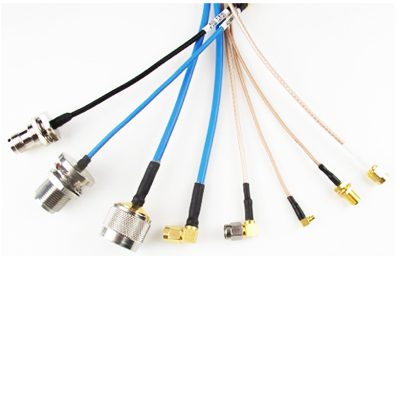


RF Coaxial Cables
Smart Electronics Communication provide expertise and manufacture RF Coaxial Cables with latest designs and advancement of technology . This cables are available in many other measurements and qualities.
| RF Coaxial Cables | ||
| # | Model Series | Ohms |
| 1. | RF Coaxial Cable RG 58/U | 50 ohms |
| 2. | RF Coaxial Cable RG 213 | 50 ohms |
| 3. | 1/4″ Inch Super Flexible Coaxial Cable | 50 ohms |
| 4. | 1/2″ Inch Low Loss Coaxial Cable | 50 ohms |
| 5. | 7/8″ Inch Low Loss Coaxial Cable | 50 ohms |
| 6. | RF Coaxial Cable RG 59 | 75 ohms |
| 7. | RF Coaxial Cable RG 11 | 75 ohms |
| 8. | RF Coaxial Cable LMR 200 | 50 ohms |
| 9. | RF Coaxial Cable LMR 400 | 50 ohms |
| 10. | RF Coaxial Cable RG 6 | 75 ohms |
SMART ELECTRONICS COMMUNICATION offers RG-58, RG-213, ¼” Super-flexible, Heliax ½” Low Loss Foam Dielectric, Heliax 7/8″ Low Loss Foam Dielectric and LMR series RF Coaxial Cable which are commonly used in HF, VHF and UHF frequency band. These RF Coaxial Cables can be supplied with or without connectors. Including these cables any other RF Coaxial Cable can be supplied which fulfill your requirements.
RF Coaxial Cables | SEC Antenna
RF Coaxial Cables are essential components in radio-frequency communication systems, helping transfer signals between antennas, transmitters, receivers and other RF equipment. SEC Antenna, also known as Smart Electronics Communication, manufactures and supplies different coaxial cable types for wireless data and voice communication applications. Its product range includes RG-58/U, RG-213, flexible coaxial cables, low-loss cables and LMR series cables for different installation requirements.
Reliable Signal Transmission
High-quality RF Coaxial Cables help connect communication equipment while maintaining signal integrity across the cable run. Cable selection depends on operating frequency, transmission distance, power requirements, impedance and installation conditions. Choosing a suitable cable can help reduce signal attenuation and support reliable communication system performance.
SEC Antenna offers cable options for applications across HF, VHF and UHF frequency bands. These products can be considered for antenna installations, radio communication equipment, wireless links and other compatible RF systems. The correct cable should always be selected according to the technical requirements of the connected equipment.
Key Features of RF Coaxial Cables
The RF Coaxial Cables available from SEC Antenna come in multiple constructions and impedance ratings. The range includes 50-ohm cables such as RG-58/U, RG-213, LMR-200 and LMR-400, alongside 75-ohm options such as RG-59, RG-6 and RG-11.
Low-loss cable options, including 1/2-inch and 7/8-inch designs, can be considered where cable attenuation is an important factor. Flexible cable types can help simplify routing in installations with limited space or tighter bends, provided the minimum bend radius is respected.
SEC Antenna can also supply cables with or without connectors, depending on project requirements. Custom connector arrangements may be available upon confirmation with the manufacturer.
Technical Specifications
The following table summarises the cable types listed by SEC Antenna. Exact electrical performance depends on the selected model and its datasheet.
Cable model or type | Impedance | Typical selection consideration |
|---|---|---|
RG-58/U | 50 ohms | Flexible RF connections |
RG-213 | 50 ohms | General RF installations |
1/4-inch super-flexible cable | 50 ohms | Flexible cable routing |
1/2-inch low-loss cable | 50 ohms | Longer RF cable runs |
7/8-inch low-loss cable | 50 ohms | Higher-performance fixed installations |
LMR-200 | 50 ohms | Compact RF connections |
LMR-400 | 50 ohms | Reduced cable loss compared with smaller cables in suitable applications |
RG-59 | 75 ohms | Compatible video and RF systems |
RG-6 | 75 ohms | Coaxial signal distribution |
RG-11 | 75 ohms | Compatible installations requiring larger cable |
Confirm the frequency range, attenuation, power handling and connector compatibility for the selected model before installation.
Applications of RF Coaxial Cables
RF Coaxial Cables are used in radio communication systems, antenna feeder connections, wireless transmission equipment, testing setups and compatible signal distribution networks. They provide a physical connection between RF components and help transfer radio–frequency signals throughout the system.
For professional installations, engineers should consider operating frequency, cable length, expected signal loss and environmental exposure. Outdoor installations may require suitable weather protection, while mobile or frequently repositioned equipment may benefit from flexible cable options.
How to Choose the Right Cable
Selecting suitable RF Coaxial Cables begins with checking the impedance required by the equipment. A 50-ohm cable is commonly used in radio communication systems, whereas 75-ohm cables are common in video and certain signal distribution applications. These types should not be interchanged without confirming system compatibility.
Next, compare attenuation at the operating frequency and the required cable length. Thicker low-loss cables can reduce signal loss over longer runs but may be heavier and less flexible. Connector type, installation space and environmental conditions should also guide the decision.
Why Choose SEC Antenna?
SEC Antenna provides cable options for different RF communication requirements, with several cable families and connector configurations available. Its product range allows customers to compare flexible, standard and low-loss solutions for compatible equipment.
When choosing RF Coaxial Cables, share the required impedance, frequency range, cable length, connector type and installation environment with the SEC Antenna team. These details help identify a suitable cable configuration for your application.
Contact SEC Antenna
Phone: +91-9717815109
Email: [email protected]