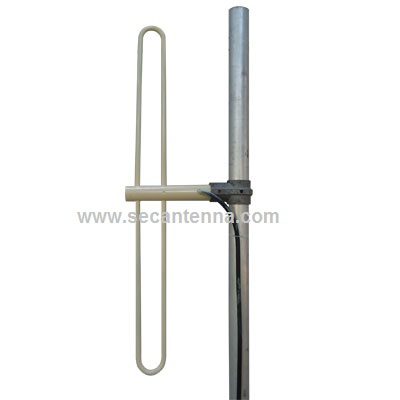


Omni Directional Folded Dipole Antenna
| # | Model | Frequency | Bandwidth | Gain | Download | Enquiry |
| 1. | SD66 | 66 – 88 MHz | 7 MHz | 3 dBd |  |  |
| 2. | SD118 | 118 – 135 MHz | 17 MHz | 3 dBd | | |
| 3. | SD150 | 136 – 174 MHz | 20 MHz | 3 dBd | | |
| 4. | SD450 | 300 – 520 MHz | 25 MHz | 3 dBd | | |
Omnidirectional Antennas: Reliable Solutions for Modern Communication
Reliable antennas are essential for communication systems that require stable signal coverage, consistent performance, and dependable connectivity. An omnidirectional antenna is designed to transmit or receive radio signals across a broad horizontal area. This makes it useful for wireless networks, industrial communication, broadcasting, security systems, and many other applications.
Choosing the right omnidirectional antenna manufacturer can help businesses obtain products that match their technical and operating requirements.
SEC Antenna provides antenna solutions designed for communication applications where reliable coverage, durability, and consistent performance are important.
What Is an Omnidirectional Antenna?
An omnidirectional antenna generally radiates signals across 360 degrees in the horizontal plane. Unlike directional antennas, which focus signals in a particular direction, omnidirectional antennas provide coverage around the installation point. This design is useful when communication devices, machines, vehicles, or users are located in different directions.
The performance of an antenna depends on factors such as:
-
Operating frequency
-
Gain
-
Impedance
-
Polarization
-
Bandwidth
-
Power handling
-
Installation height
A professional omnidirectional antenna manufacturer should consider these technical requirements from the beginning. Proper design and testing help ensure that the antenna performs efficiently within the intended communication system.
Applications of Omnidirectional Antennas
Omnidirectional antennas are used in residential, commercial, and industrial environments. Wireless networks may use them to provide broad coverage across offices, campuses, warehouses, and outdoor areas. Industrial facilities can use these antennas for machine-to-machine communication, telemetry, remote monitoring, and control systems.
They are also useful in:
-
Transportation
-
Public safety
-
Security systems
-
Marine communication
-
Radio broadcasting
-
Wireless networks
-
Industrial communication
In locations where communication devices move frequently, broad horizontal coverage can reduce the need for continuous antenna alignment.
For these applications, an omnidirectional antenna manufacturer should focus on signal stability, durability, and compatibility with the complete communication network. The antenna must be selected according to the required range, frequency band, mounting arrangement, and environmental conditions.
Important Design Considerations
A professional antenna design begins with a clear understanding of the intended application. Operating frequency is one of the most important factors because the antenna must work within the required frequency range. Gain influences how energy is distributed, while polarization affects compatibility between transmitting and receiving equipment.
Material selection is equally important. Strong and weather-resistant materials can help protect the antenna from:
-
Sunlight
-
Rain
-
Dust
-
Vibration
-
Temperature changes
Connectors, cables, mounting brackets, and protective coatings should also be selected carefully to support reliable operation.
During the manufacturing process, quality control should include:
-
Dimensional checks
-
Electrical testing
-
Connector inspection
-
Performance verification
These steps help identify manufacturing issues before the product reaches the customer.
Benefits of Professional Antenna Manufacturing
Working with an experienced antenna manufacturer can provide several practical benefits. Customers may receive technical guidance, application-based recommendations, customized dimensions, and installation support.
A professional supplier can also help evaluate:
-
Antenna gain
-
Frequency range
-
Connector type
-
Mounting options
-
Enclosure requirements
Consistent manufacturing processes help improve product reliability and maintain uniform performance across multiple units. This is especially important for large communication networks, infrastructure projects, and industrial installations where maintenance or replacement can be challenging.
A reliable omnidirectional antenna manufacturer should maintain clear product specifications, inspection procedures, technical documentation, and after-sales support. These services help customers make informed purchasing decisions and simplify future maintenance.
Choosing the Right Antenna Supplier
Before selecting an antenna supplier, businesses should review:
-
Operating frequency
-
Gain
-
Radiation pattern
-
Power rating
-
Mechanical strength
-
Installation requirements
It is also useful to understand the supplier’s testing facilities, production capabilities, delivery schedules, and customization options.
The right antenna solution should balance technical performance, product quality, installation practicality, and overall project cost. A low purchase price may not provide long-term value if the antenna has poor durability or does not match the communication system.
Why Choose SEC Antenna?
SEC Antenna provides antenna solutions for different communication requirements, with product selection based on factors such as operating frequency, coverage, mounting conditions, and environmental exposure.
Whether you need an antenna for industrial communication, wireless networks, broadcasting, security, transportation, or outdoor applications, SEC Antenna can help you evaluate the appropriate solution for your requirements.
Looking for a reliable antenna solution? Contact SEC Antenna today to discuss your application, technical requirements, frequency range, and installation conditions. Get professional guidance on selecting the right antenna for dependable and long-term communication performance.
Conclusion
Omnidirectional antennas support broad-area communication in residential, commercial, industrial, and outdoor environments. Their ability to provide horizontal coverage makes them suitable for many wireless and radio-frequency applications.
By focusing on accurate design, quality materials, careful testing, and application-specific support, an experienced omnidirectional antenna manufacturer can deliver dependable products for demanding communication needs.
Businesses planning a new network or upgrading an existing system should evaluate antenna specifications carefully and work with a supplier that understands their operating conditions.
Choose SEC Antenna for professional antenna solutions tailored to your communication requirements. Contact the SEC Antenna team today to discuss your project and find the right solution for reliable connectivity.